S M G
S M G
S M G

In 2010, Christopher Nolan was the toast of Hollywood, having created a rare beast – a critically acclaimed
AND incredibly financially successful Hollywood blockbuster, “The Dark Knight”. Warner Brothers gave him a reward, to let him have carte blanche to make his long gestating treatment about dream stealers, first pitched in 2002 after he made “Memento”. At that time, the studio wanted him to have more experience making big budget movies, and now he had that in spades. Nolan for his part was happy to have waited, having realized that the budget for a movie based on dreams and dream states would have to appear limitless, and be pretty expensive, saying "…as soon as you're talking about dreams, the potential of the human mind is infinite. And so the scale of the film has to feel infinite. It has to feel like you could go anywhere by the end of the film. And it has to work on a massive scale.". As the movie edged towards production DiCaprio was the first actor hired, and Nolan and he worked together on finessing the script, finally selling it to Warner Brothers in February 2009.
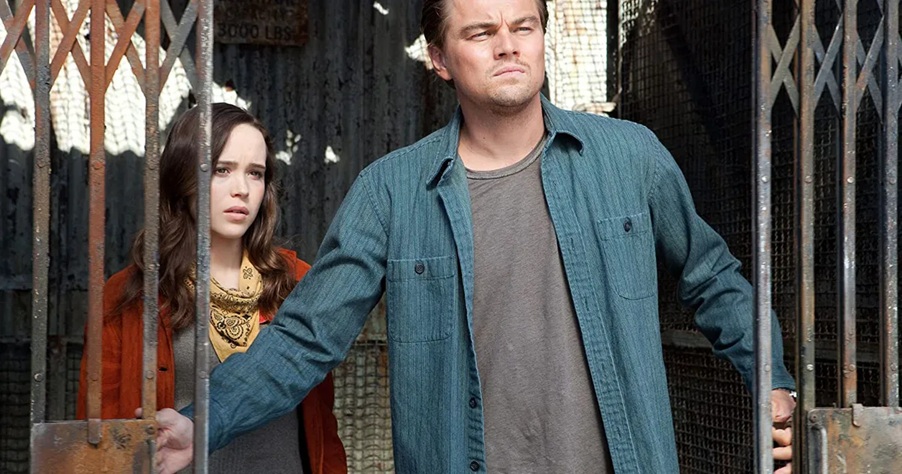
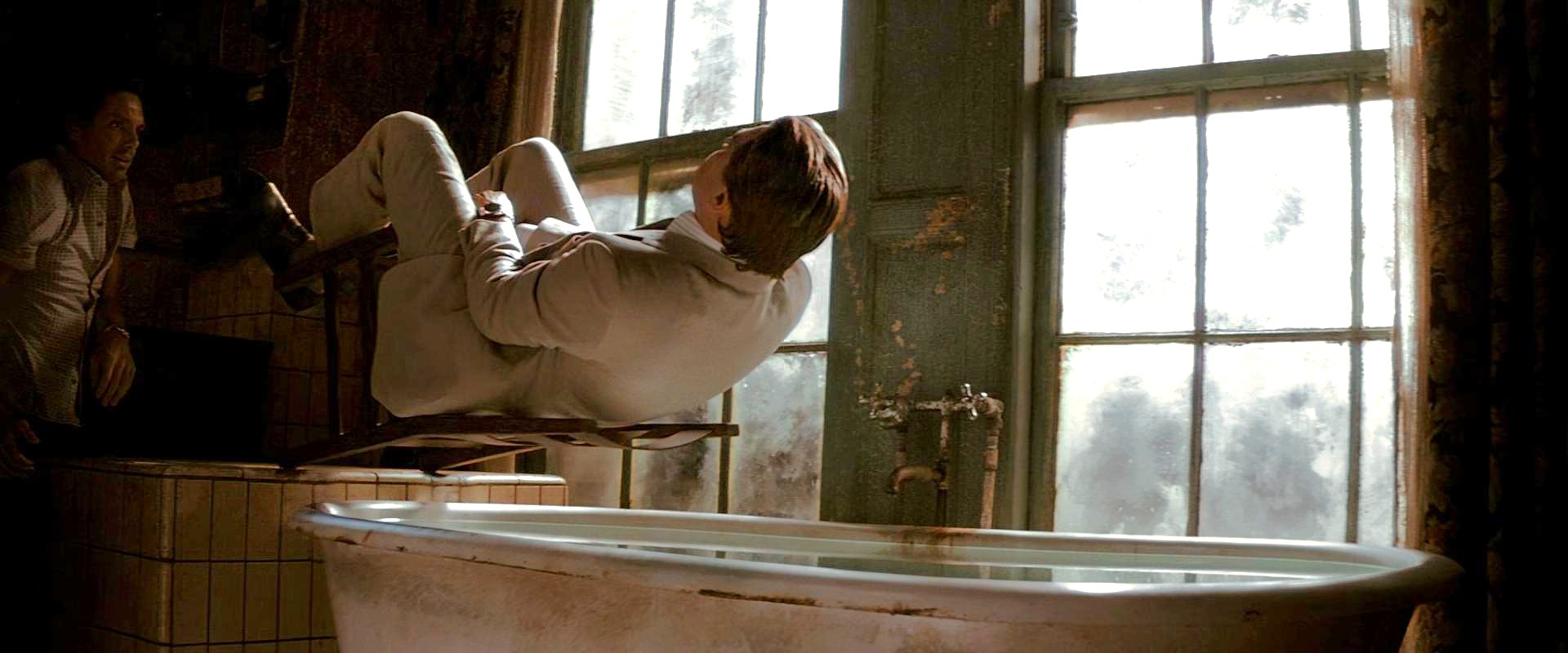
The rest of the cast fell in place, and principal shooting started in Tokyo in June that year. Shooting moved to Bedfordshire for the majority of the interior sets. The special effects were done by Chris Corbould, whose name you might recognize from many of the Bond movies, from A View to A Kill through to Skyfall, and who subsequently worked on the next Star Wars movie then in production. The Director of Photography (DoP) was Wally Pfister, with whom Nolan had a long standing relationship, having worked with him on all his movies from Memento onwards. The two of them helped develop the groundbreaking sets which tilted and rotated to help give the required weightless feel of some scenes.
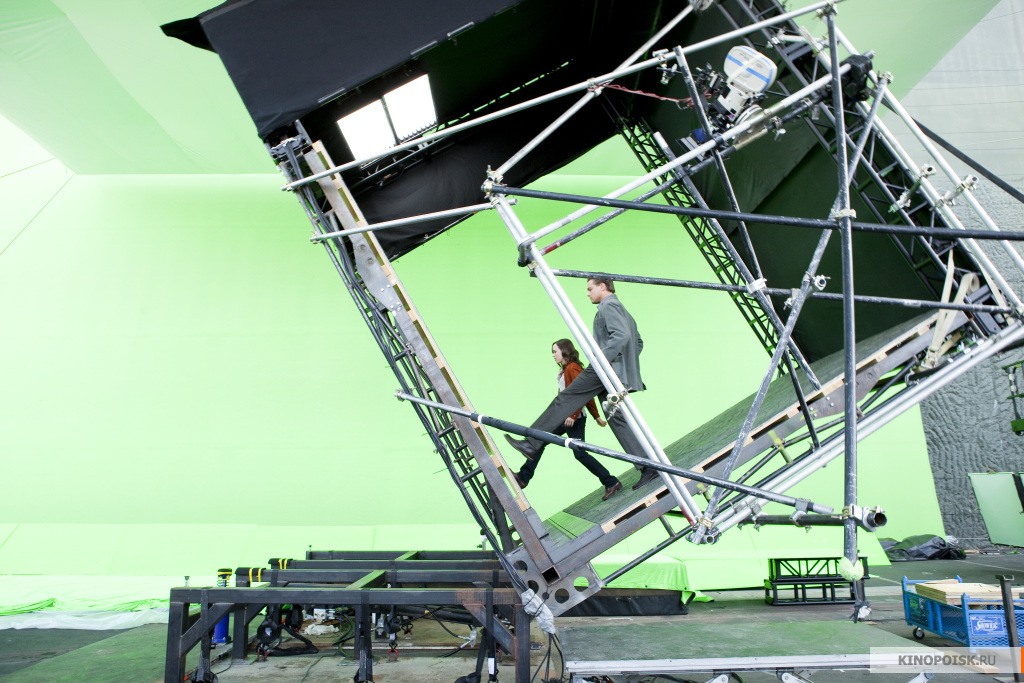
The rotating hotel / bar set which tilted 30 degrees
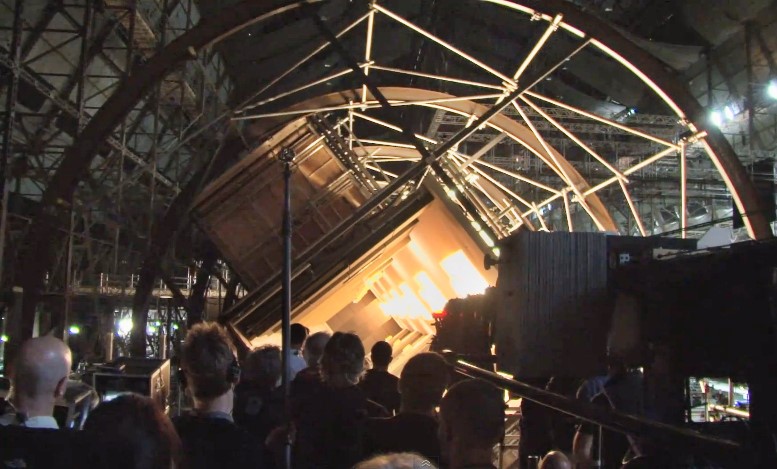
The innovative corridor set, 100ft long, which rotated 360 degrees
In fact, although touted as a visual effects movie, it actually has a surprisingly high number of shots done live (in camera special effects), in order to create an authenticity to what was being seen. Only about 500 shots were cgi, as opposed to about 2000 on a Transformers movie or 620 on the lower key Batman Begins. Shooting then moved back on location to France (Musee Galliera subbing for the college of architecture) and the ‘often-seen-in-clips’ Bistro scene.
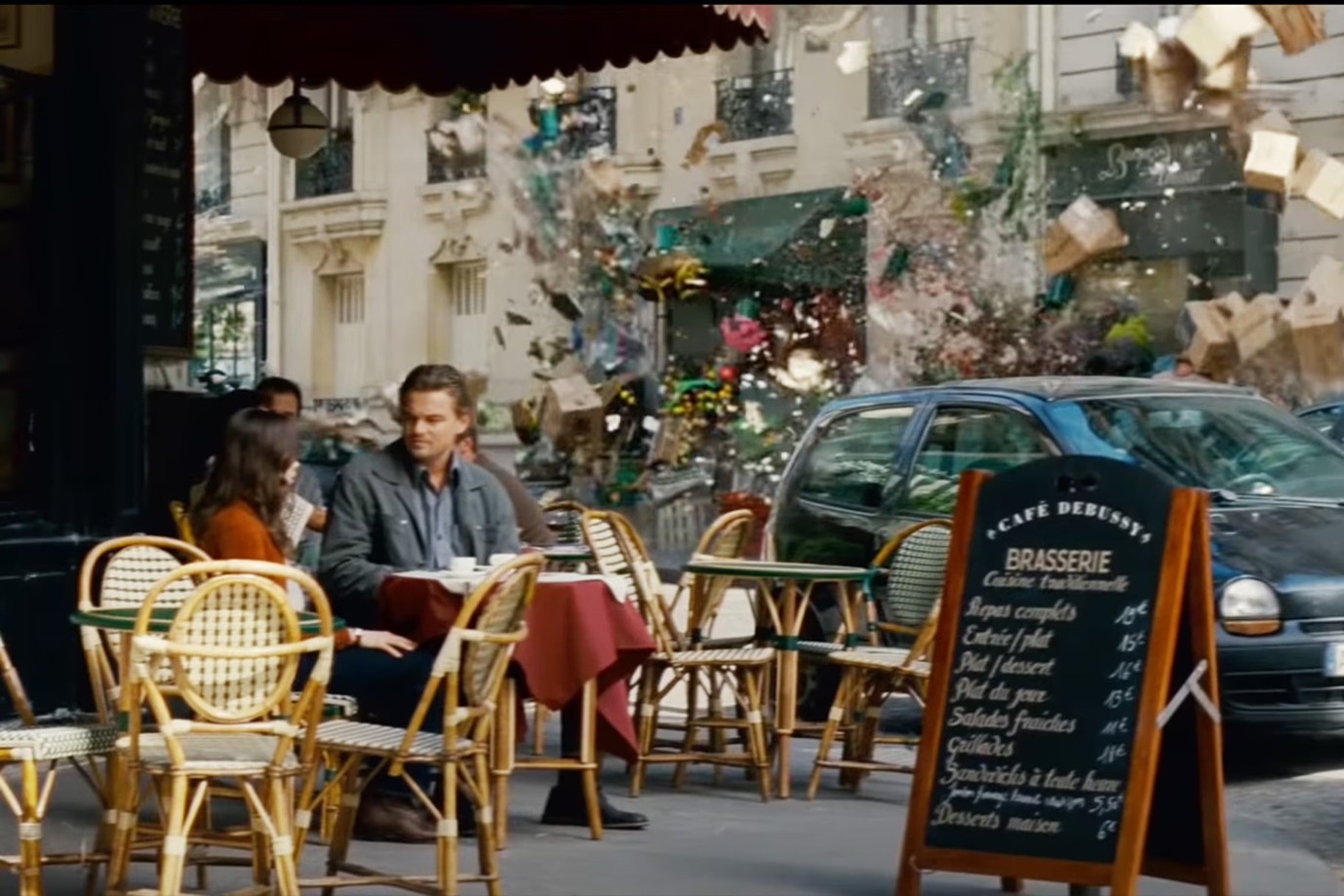
Next up Tangier doubled as Mombasa for the scenes where Cobb hires Eames and Yousuf, then shooting moved again for interior scenes on a Warner Brothers sound stage for Saito’s castle scenes and the car chase in LA. That scene was scripted in rain, and LA remained resolutely sunny, necessitating some movie magic and water cannon to create the desired look and feel.
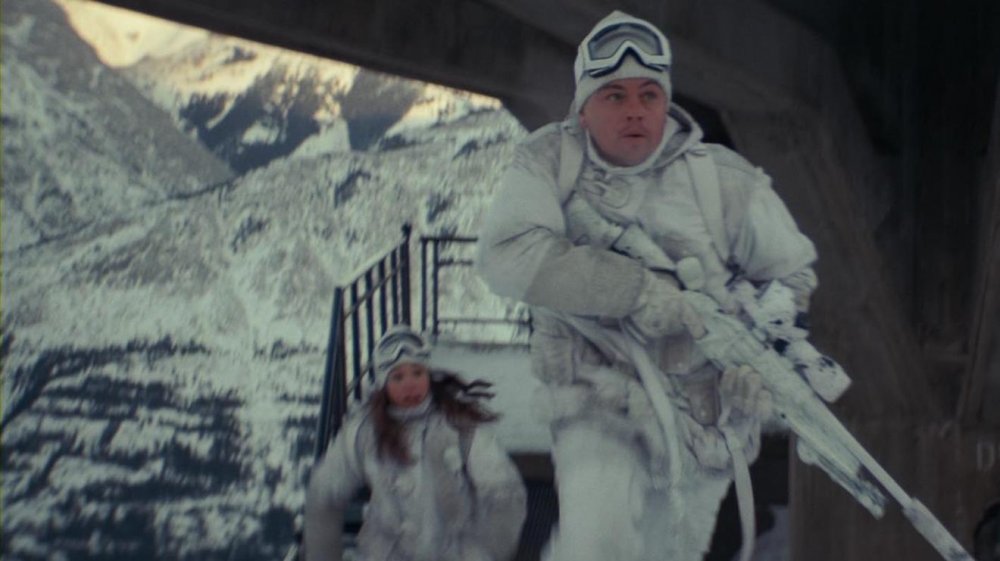
Finally, Alberta was the final location shoot, at the temporarily closed Fortress Mountain ski resort – this sequence famously inspired by Nolan’s favourite movie, On Her Majesties Secret Service. And if I might add, what impeccable taste he has.
Wally Pfisters contribution was critical to the audience subliminally keeping track – he imbued the
photography of the different places with different tones – sterile and cool in the mountain fortress, warm hues for the hotel, and neutral in the van.
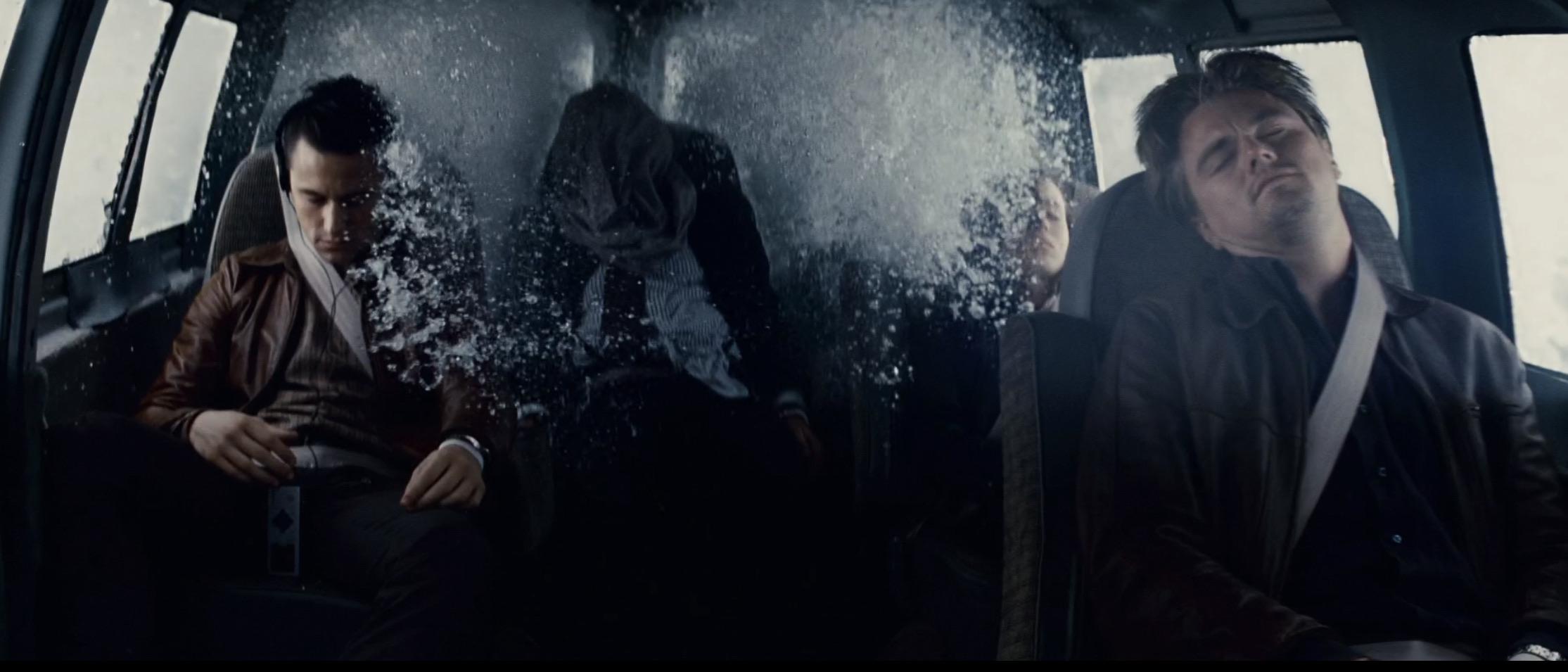
Pfister and Nolan have always been strong proponents of film stock over digital cameras, arguing that it still gives greater quality, even though they acknowledge that it will one day be superseded once digital cameras can do what film can. In this case, to maintain a hand held feel of immediacy, their preferred format – IMAX – had to be ditched, but the still large 65mm film was used. Digital cameras were tested for the slow motion scenes, but did not prove up to scratch, as Pfister said, "Out of six times that we shot on the digital format, we only had one useable piece and it didn't end up in the film. Out of the six times we shot with the Photo-Sonics camera and 35mm running through it, every single shot was in the movie."
Nolan also resisted calls to shoot in 3D – being of the view that 3D is a perception, and the artificiality of 3D can actually remove people from being immersed in the story. He looked at post production 3D but could never get it to a standard he was happy with and so abandoned the attempt. Hans Zimmer ( the composer of the music) had a more subtle contribution – the unifying theme of the song used as a central theme, he slowed down until it was unrecognizable, and those brassy blasts then form a foundation of what we hear in the movie. The movie and in particular the ending have been fiercely debated online, and invite post movie discussion, enhancing the popularity of the movie. Unusually for a non-sequel, 100 Million dollars were reportedly spent on marketing the movie, and the campaign was praised for its clever way of withholding information and maintaining secrecy while intriguing potential pundits. The studio need hardly have worried - unquestionably, on release in June 2010 Inception was a success in every sense of the word. In fact, it grossed over 800 million dollars worldwide, becoming at that time the 42st highest grossing movie of all time, cementing Nolan’s reputation as a director worth betting on. In fact, it won 4 Oscars that year, for Cinematography, Sound Editing, Sound Mixing and Visual Effects. It was nominated for 4 more including best picture. Critically, it has been praised for its originality, strong cast and strong production values from set design to score and special effects. Rotten Tomatoes describes it as “a rare summer blockbuster that succeeds viscerally as well as intellectually.” Empire said it was like Stanley Kubrick adapting the work of the great sci-fi author William Gibson. Not all critics were kind, however, some criticizing it for being so complex that most of the movie was exposition rather than characterisation. The New Yorker considered it a stunning looking film that gets lost in its intricacies, a movie devoted to its own workings and little else. The majority of critics, and of audiences too, rated it highly and it appeared in many top ten lists of the decades films.
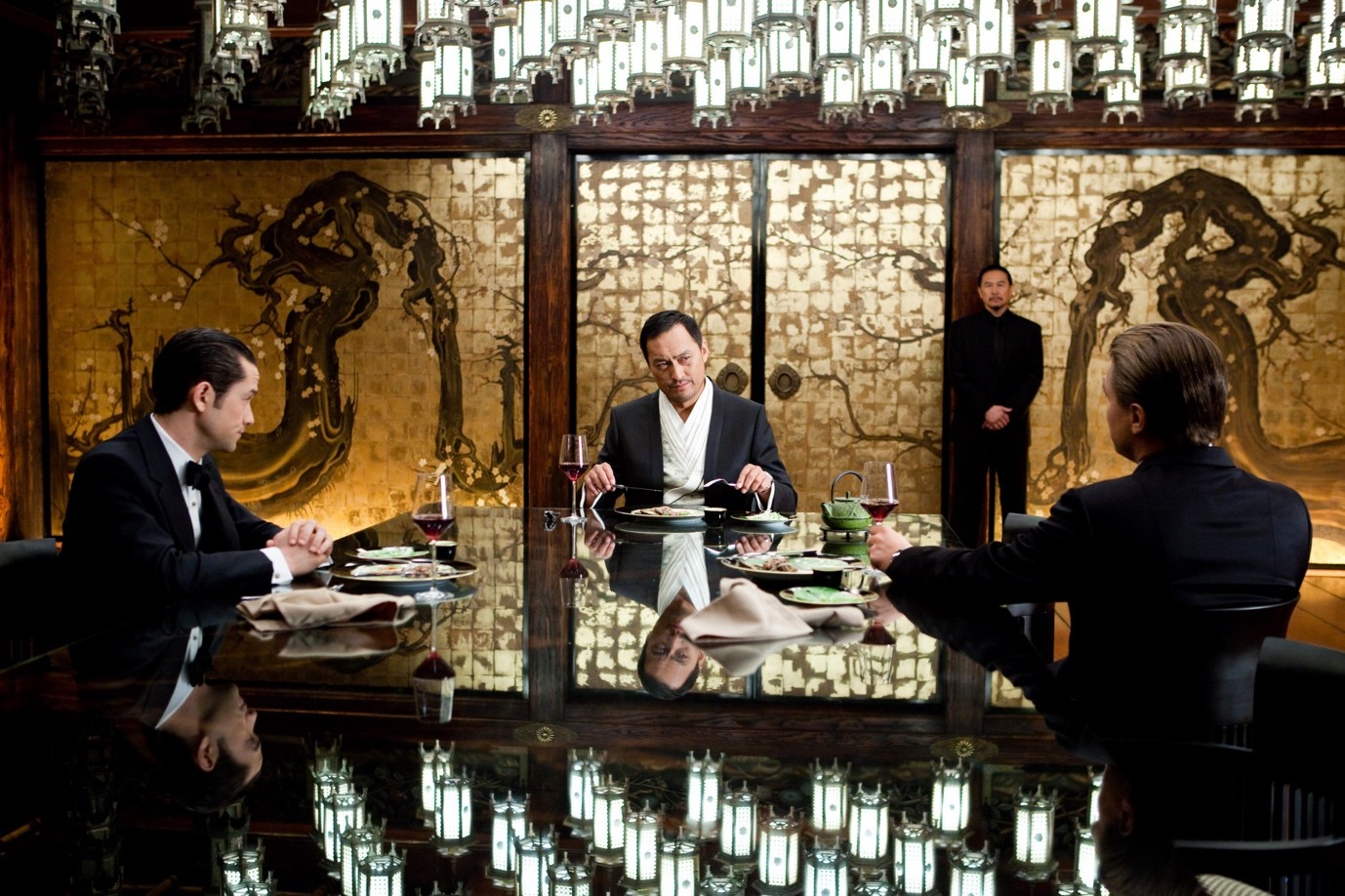
So is it an over convoluted movie so full of structure that characterization and heart are missing? Or is it Nolan’s masterpiece, proof that mainstream cinema and art can be mentioned in the same breath? The only answer as always, is to watch it yourself, and make up your own mind.
© Stephen's Movie Guide
Inverurie Website Design